The tornadoes that have been so much in the news these last few weeks brought to mind a question. When did we stop calling them cyclones and start calling them tornadoes? That is just the kind of question that can be answered by a search of our online Alto Heralds.
The most serious storm to hit Alto, referred to as a cyclone, took place in 1893, before the Alto Herald was in existence, but in 1933 a “Forty Years Ago” column recalled the catastrophe.. Many of the downtown businesses and the Presbyterian church were damaged, while the high school building, the train depot, the Baptist church and several homes were completely demolished.
In April of 1929 a sizable cyclone hit just north of Alto tearing up trees and damaging homes and outbuildings. A chinaberry tree in the yard of Jess Page was uprooted and turned upside down, burying the crown of the tree in the hole where the roots had been. Surprisingly no injuries were reported, although the same storm caused several deaths and many injuries in Slocum.
Several smaller storms caused “cyclone type winds” during the twenties. The last report found of a cyclone was in May of 1935, not in Alto but in Weches, where it completely destroyed several homes and killed at least one person.
Incidentally, searching for “cyclone” was complicated by the fact that there was a very popular Texas politician who went by the name of “Cyclone” Davis, and a regular Lufkin liquor store ad for a whiskey named “Kentucky Cyclone”.
By 1936 we see the first use of the word “tornado”. It is in a local ad for tornado insurance. During the 50’s and 60’s several tornadoes were reported with the worst occurring in May of 1953. Chicken houses seemed to take the brunt of the storm with hundreds of baby chicks being drowned by the accompanying rainfall. All creeks and rivers were out of banks. This same issue of the Herald reported Alto citizens were raising funds to send to Waco which had been devastated by a tornado just ten days before.
There were a couple of interesting sidelines revealed by the“tornado” search. In May 1957, Charles Lewis Thomas was named chief observer of the Alto Ground Observance Post. This organization was set up in World War II to watch for enemy aircraft, but was later changed to watch for violent weather. And in 1966 the Alto Volunteer Fire Department conducted an elaborate tornado drill.
Many other kinds of violent weather are reported as hitting Alto, chiefly high winds, hail and heavy rains. The last week of April in 1957 over 20 inches of rain fell. The Neches river covered Highway 294 and the Bowles Creek bridge at Weeping Mary was washed out. In May 1955 the community of Redlawn reported hail the size of “fists, eggs and saucers”.
It is likely that at least some of those torrential rains were offshoots of Gulf hurricanes, but the word “hurricane” is never used in describing them. In fact the only front-page mention of “hurricane” comes in the 1960’s when the members of the Thursday Study Club began to decorate their homes with “hurricane lamps”.
Originally published in the June 12, 2013 edition of the Cherokeean
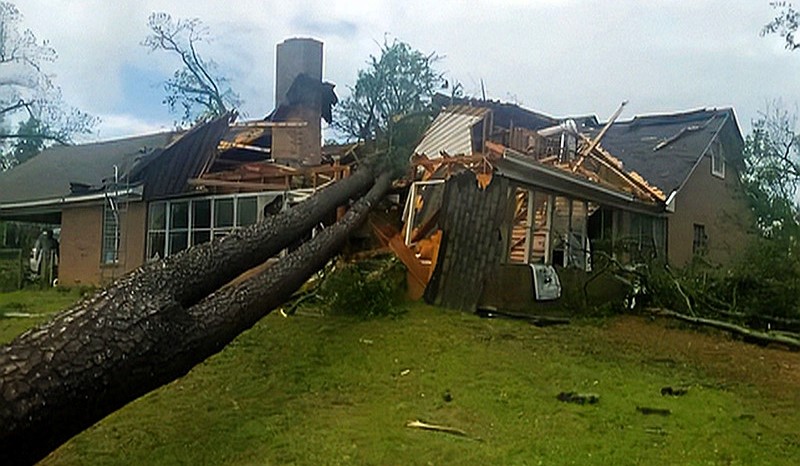
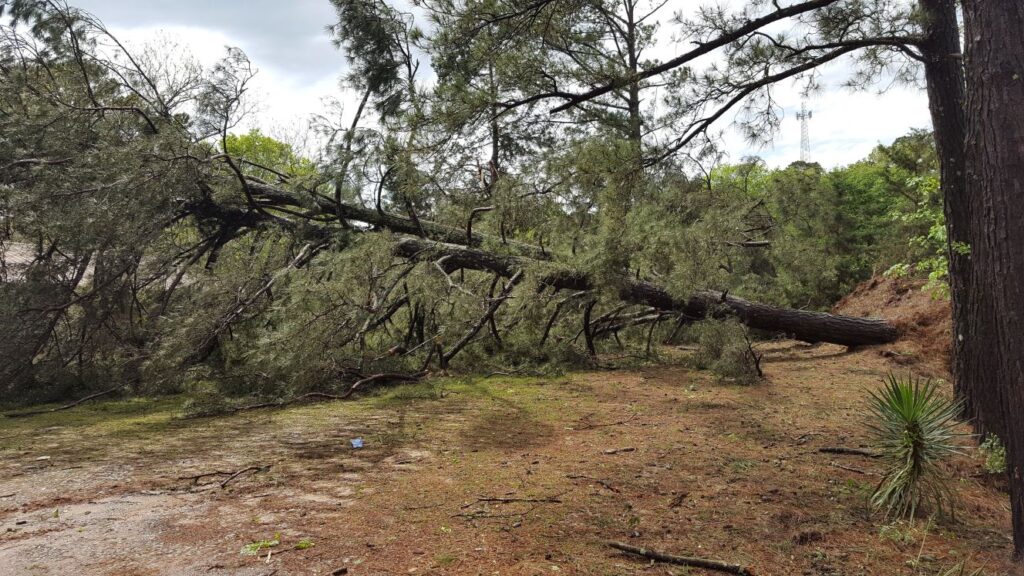
The image at the top is from the wild weather that’s still fresh in memory for many of us – the April 2019 tornado. Here’s another one from the next edition of the Cherokeean.
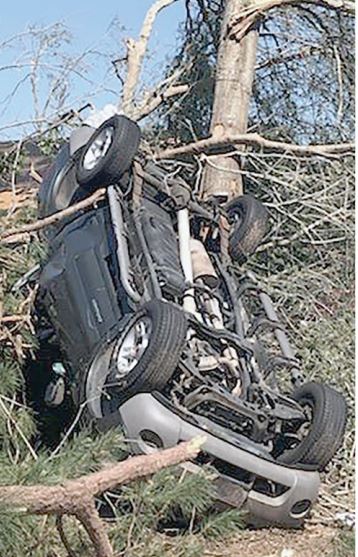
And one I took myself. Somewhere under that pine tree was Alva Joy Jones’ house, where I spent many happy hours as a kid.
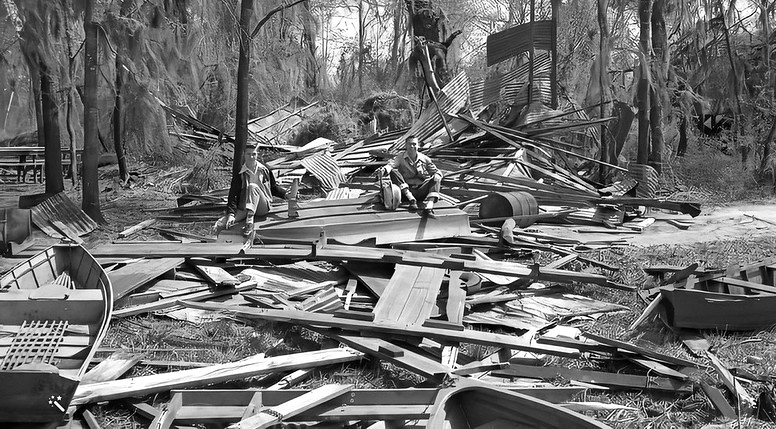
The Duren Lake tornado of 1957 has been well represented on our pages, but I did find a couple in the Stella Hill Library Wild Weather album that were new to me at least. Great pictures! I wish I knew who the people were, but maybe some of you can identify them.
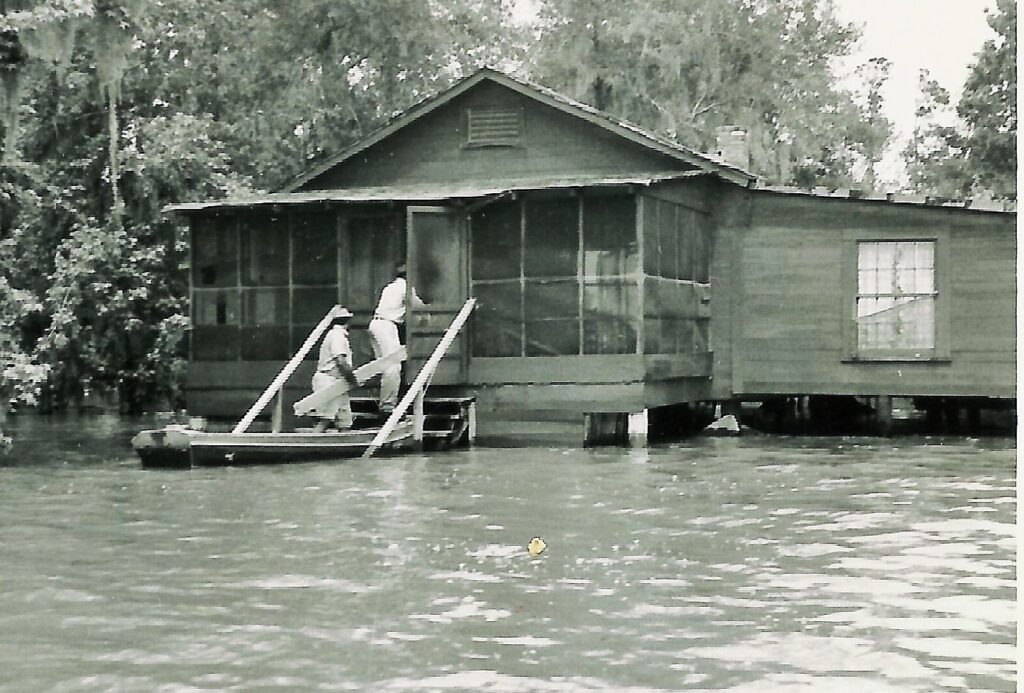
The thing I like about this one is that I can count four boats in the image
A few years earlier, in 1948, someone had some down trees to deal with, but I’m not sure who or where.
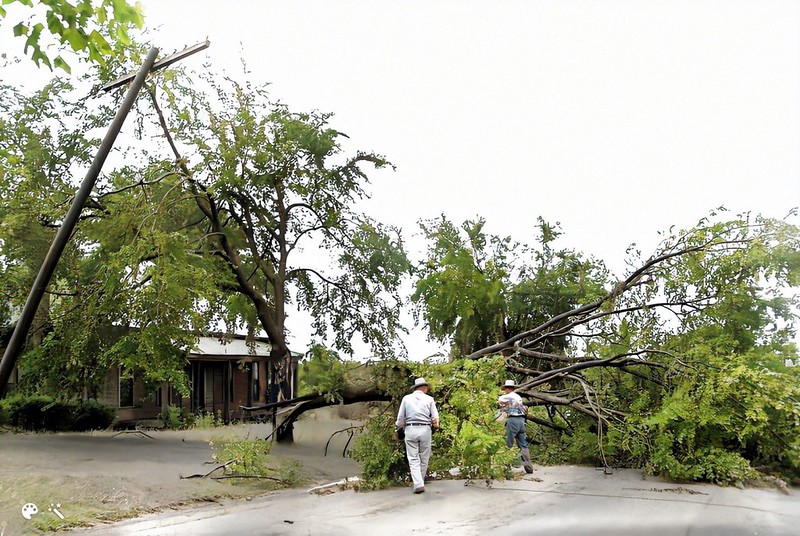
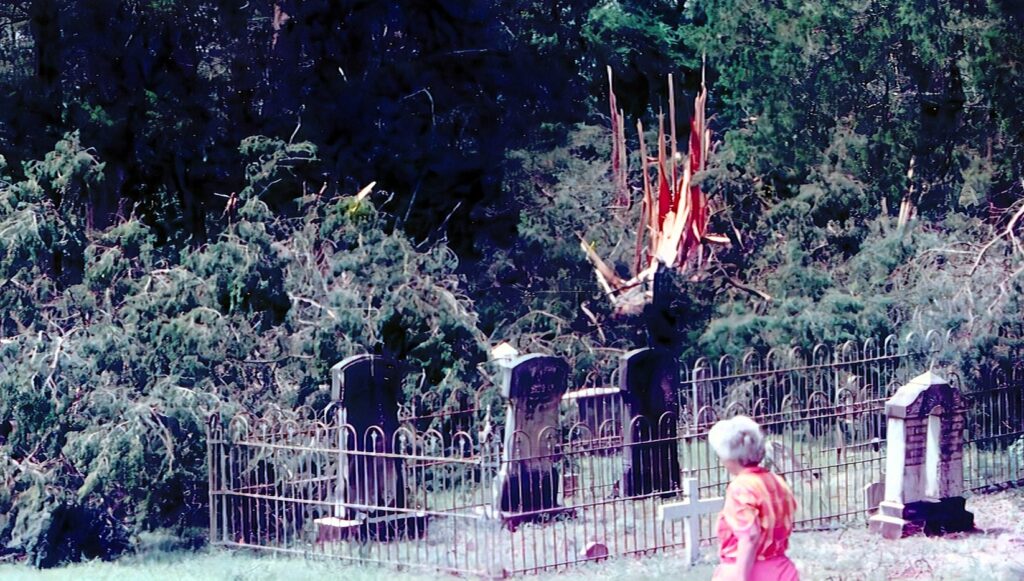
And I will close with one of the big windstorm that took out a lot of the magnificent old cedar trees at the Shiloh Cemetery. It’s not the most dramatic picture, but we do get a glimpse of our esteemed columist checking on the headstones of my esteemed ancestors.