Originally published in the June 17, 2015 edition of the Cherokeean
As we come up on the 74th anniversary of the beginning of World War II, I began to wonder what the Alto Herald had to say about Pearl Harbor. Unfortunately, I found that 1941 is one of those years, along with 1943 and 1944, which is missing from our collection.
However, I did find 1942, and I was shocked and impressed at how quickly our country was able to prepare for war. Someone in Washington must have been thinking ahead.
By January 7, 1942, barely a month after Pearl Harbor, the Herald reported on the activities of the Tire Rationing Board of Cherokee County. J E Cates was the Alto representative on this Board, which was charged with the responsibility for distributing tires to those who needed them for essential transportation for the war effort.
In the same issue, Sheriff Frank Brunt warned citizens to make a record of the serial numbers on their tires, as he expected theft to be a growing problem as tires became scarce.
Also President Roosevelt announced draft registration by February 16 for all men age 20-44 who had not previously registered.
The changes announced due to the National Emergency lend an insight at to how things were operating before the war. For instance, the 5 grocery stores in Alto – Cosper’s Red & White; H D Rogers, Brum Brunt, John Ramey and George Kelly – got together and let it be known that in order to save tires and gasoline, they would make only 1 delivery a day, at 9:30 am. Apparently, the grocers had been making home deliveries after each phone call.
The Post Office also was adding some rules: People who received their mail in General Delivery were asked to send just one family member to the post office each day. Rural patrons were instructed not to come by or send their school children by the office to pick up their mail unless it was of urgent importance.
In addition, surprisingly, each postmaster in Northeast Texas was asked by the Dallas Marine Recruiting Station to find 2 volunteers to enlist into the Marine Corps.
By the end of January, Mayor W E Bynum had divided the city into zones and appointed Joe Cruseturner, Gus Rounsaville, Arch Holcomb, Byron Blanton and S P Fox as chairmen to formulate plans for a test blackout to be held whenever Army planes were available to check it out.
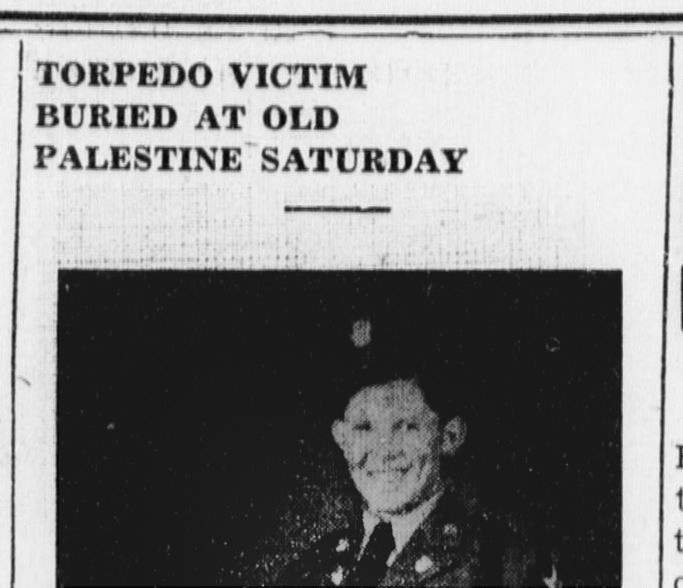
That same issue of the paper, January 29, 1942 reported what was probably Alto’s first fatality of the war. Hamon Brown, whose father lived in Wells, but who had attended school at Linwood and Alto, was killed by a torpedo which hit the oil tanker “Allan Jackson” off the coast of North Carolina.
By March 1 sugar was also rationed, and people were being requested to sell back to the grocer any amount they had over 2 pounds, as households could buy only 2 pounds per week.
The March 19 Herald has a list of the draft numbers of all 1102 registrants of Cherokee County. The County Draft Board met and drew the numbers, and by coincidence the first 5 numbers drawn were from the Alto area. Ironically, Number 1 was Fisher Harrison, who just happened to be the Alto member of the Draft Board. The next four were John Harvey Dover, J T Hanvy, Wilford Hughes of Forest, and George L Landrum.
As fewer and fewer of us remain who remember those days, having the extant newspapers online becomes an even more valuable tool for preserving the history of our nation and our community.